
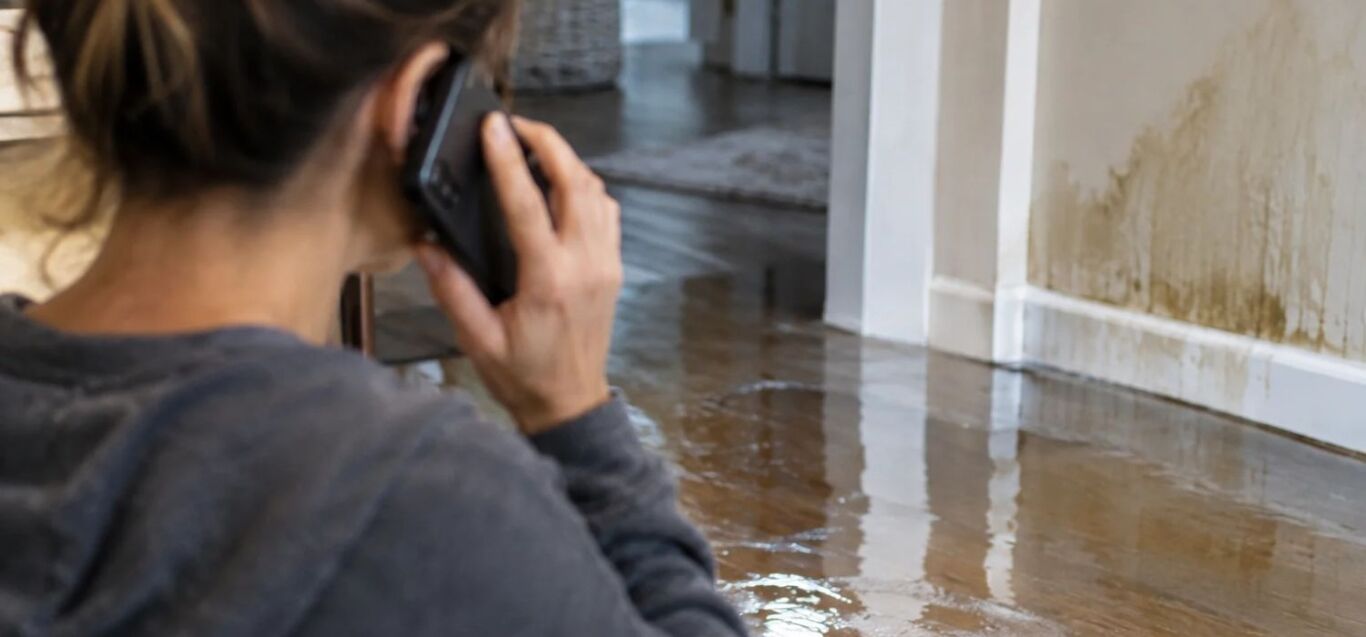
Water’s spreading across your floor, your heart’s pounding, and your phone’s already in your hand. So, who gets the first call, your insurance company or a water damage restoration company? Here’s the short version we give every homeowner in West Linn, OR: stop the water if you can do it safely, call a restoration crew to start drying, and report the loss to your insurer that same day.
That order matters, since drying can’t wait on paperwork. Below, we’ll walk through the first few hours, explain who actually pays the restoration company, and cover the local details that shape a water damage insurance claim around here.
Safety comes first. If water’s anywhere near outlets, cords, or appliances, stay out of it, and shut off power at the panel only if you can reach it from a dry spot. Dealing with a sewage backup? Keep kids and pets well away and don’t try to clean it yourself.
Next, go after the source. You can usually stop a small leak at the valve behind the toilet or under the sink. For anything larger, use the main shutoff, which is often located where the water line enters the house, in the crawl space, in the garage, or near the water heater. Can’t find it? The valve in the meter box by the street can work in a pinch, though it may take a special key, and some water providers would rather you call them. Locate your main shutoff on a dry day, because hunting for it with water on the floor is no fun.
Then call a restoration company. Don’t hold off for photos or a hunt for the leak’s origin.
While you wait:
Water from a burst line rarely stays where you can see it. It wicks up drywall, slides under flooring, and drips into crawl spaces. Kitchens are a classic hiding spot, and water damage behind your cabinets can sit for weeks before a swollen toe kick or a musty smell gives it away. Tell the crew about any spot you can’t see into.
Flip to the “Duties After Loss” section of your policy, and you’ll usually find language asking you to protect the property from further damage. The state’s insurance regulator gives the same advice: protect your property, save receipts, and hold off on permanent repairs until your insurer inspects.
That’s where water mitigation services come in. Mitigation is the emergency phase: pumping out standing water, pulling wet materials that can’t be saved, and setting up air movers and dehumidifiers. Rebuilding comes later, after your adjuster has assessed the damage.
Here’s what happens when our crew arrives:
Explaining that plan is a big part of how we work. You’ll hear what the readings mean and why a section of drywall has to go before anyone picks up a pry bar.
Call the claims line the same day. Booking a crew and reporting the loss can easily happen within the same hour.
When you call:
Your insurer must acknowledge your claim within 30 days under Oregon’s Homeowners Bill of Rights, and any denial must include a clear written explanation.
Hang on to damaged materials, or at least photos and measurements of them, until the adjuster says you can toss them. Sewage-soaked debris is the exception. Photograph it, then let the crew haul it out, since it shouldn’t sit in your living space.
Most standard homeowners policies cover sudden, accidental water damage, such as a burst supply line or a water heater failure. Two common exclusions matter a lot here.
River flooding is the big one. West Linn sits where the Tualatin River meets the Willamette, and damage from rising river levels generally requires a separate flood policy. Long, slow leaks are the other. A drip that’s been rotting a subfloor for a year often falls under a gradual-damage exclusion. Your policy wording has the final say, so read the water section or ask your agent.
Before you open a claim, do a little math. Say covered repairs come to $4,000 and your deductible is $1,000. Your insurer would pay up to $3,000, and you’d cover the deductible. If the damage is close to your deductible, the DFR suggests weighing whether filing a claim is worth it, since a reported claim could affect your future premium or your ability to get coverage.
If a covered loss makes your home unlivable, policies generally cover additional living expenses, such as temporary housing, up to the policy limit. Your policy may call this “additional living expenses” or “loss of use.” The DFR’s consumer advocates offer free help at 888-877-4894 (toll-free) or DFR.InsuranceHelp@dcbs.oregon.gov.
The honest answer is that you do. You hire the restoration company, you sign its contract before work starts, and the bill is your responsibility. That stays true even when your insurer recommends the company, because the contractor works for you.
You’re not necessarily stuck with the whole cost, though. If the loss is covered, your insurer reimburses you up to the policy limit, minus your deductible. Before you sign, read the contract and check three things:
Watch for one more document, called an assignment of benefits (AOB). Signing one hands your claim rights to the contractor, who can then deal with your insurer directly and even sue it. Oregon’s DFR warns that you’d be giving up control over many repair decisions, and it points out that you don’t need an AOB to get repairs done.
The industry standard for water damage, ANSI/IICRC S500, sorts water into three categories. Category 1 is clean water, like a burst supply line. Category 2, often called gray water, carries some contamination, such as a washing machine overflow. Category 3 is grossly contaminated, like sewage or floodwater.
Clean water doesn’t always stay clean. Time, warmth, and contact with dirty materials can push it into a higher category, which changes how the crew handles the job.
The category shapes the whole job. If the crew gets there early, it can often dry-clean water in place. Sewage is a different story, and porous materials such as carpet pad, drywall, and insulation usually have to go. That’s biohazard cleanup territory. It calls for protective gear, containment, and disinfection, and a shop vac with a bottle of bleach won’t cut it.
Moisture that lingers for a day or two gives mold a head start. If you can see mold, you usually don’t need a test to confirm it, and the Oregon Health Authority points out that testing can’t tell you whether a given amount will affect your health. Mold testing earns its keep when you smell mold but can’t find it, or when water has sat hidden in walls or a crawl space.
Our standard inspection includes an indoor air test, an outdoor air test for comparison, and a tape lift from the furnace, with same-day results from a local lab. Testing doesn’t replace fixing the moisture, and since there’s no standard for a “safe” level of indoor mold, results help shape the plan rather than settle it.
Whether a test confirms the mold or you can see it plainly, we ask about allergies and sensitivities in the household before choosing a treatment. We fix the moisture source, remove materials we can’t clean, spray the affected areas, and then fog the air. The Environmental Protection Agency says homeowners can usually tackle growth under about 10 square feet themselves, but it recommends professional mold removal for anything larger or for mold caused by sewage or other contaminated water.
Your insurer may hand you a list of preferred vendors. That’s fine if you like one of them, but Oregon’s Homeowners Bill of Rights says you can use any contractor. Coverage depends on your policy, not on whose name is on the truck.
As you compare your best water damage restoration options, here’s what we’d want to know:
A trustworthy water damage restoration service answers every one of those without pressure. If someone pushes you to sign before you’ve read the contract, thank them and move on.
Portland International Airport averages about 37 inches of precipitation a year, based on the National Weather Service’s 1991 to 2020 normals, and most of it falls in the cooler months. A few habits help you stay ahead of it:
Once everything’s dry, water damage repair puts the house back together, from vapor barriers and insulation to flooring and drywall. Keeping mitigation and repairs with one company means fewer handoffs and fewer surprises.
Got water where it shouldn’t be in West Linn? Contact Restoration Techs at any hour of the day.
404 Beavercreek Rd unit 232
Oregon City OR 97045
Mon - Sun: 24 Hours
Office Hours: Mon - Fri: 9am - 6pm
